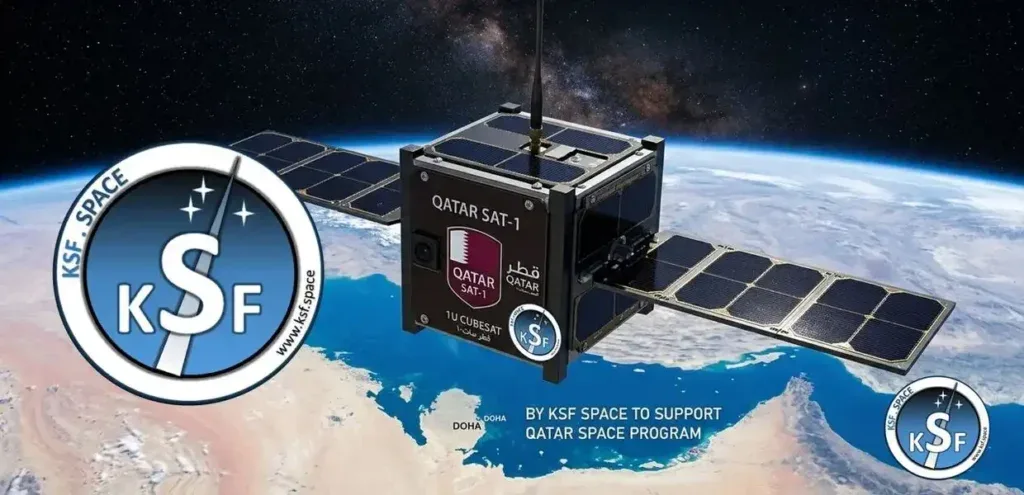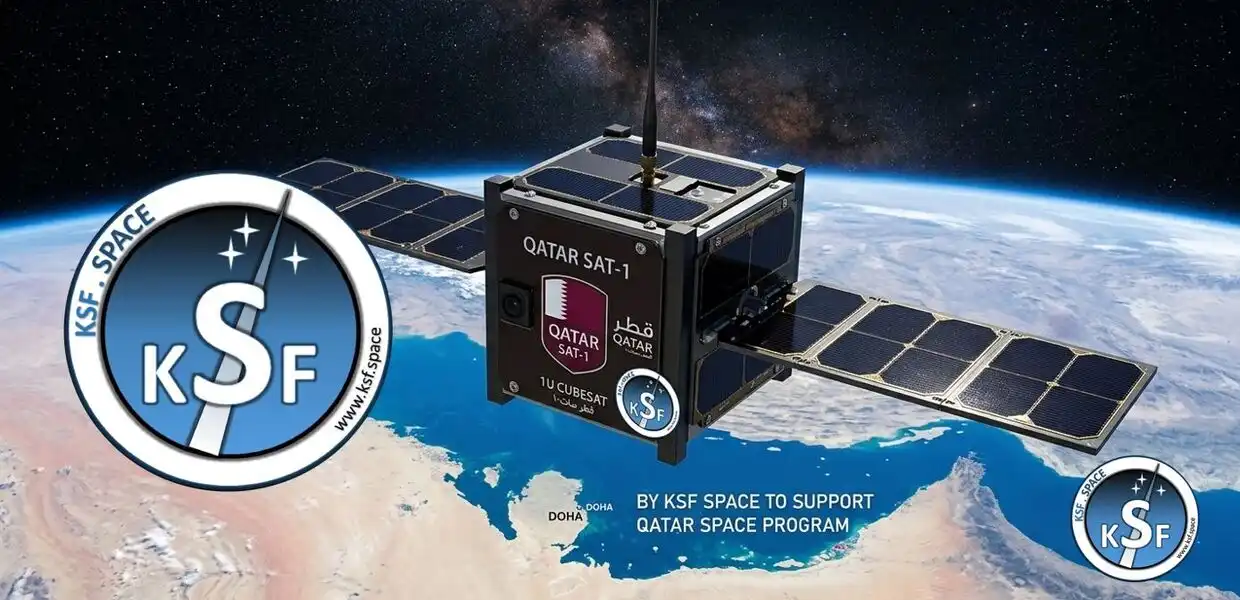
The global space economy is moving at escape velocity. Space exploration is no longer the exclusive playground of billion-dollar superpower government agencies and monolithic aerospace conglomerates. Instead, we are living in the “NewSpace” era, where miniaturized, modular, and highly efficient satellite technology has democratized access to Low Earth Orbit (LEO). At the very heart of this technological shift is the Arabian Gulf, where nations are rapidly converting oil wealth into knowledge-based economic powerhouses. As regional ambitions skyrocket, a clear focal point has emerged: Cubesat Qatar initiatives.
For academic institutions, the challenge has shifted from why they should participate in the space sector to how they can deploy flight-ready systems rapidly. Leading this global charge is KSF Space, a premier non-profit foundation steered by an international technical committee of elite aerospace experts. KSF Space is recognized globally as the trusted champion for leading STEM and cubesat for professional education universities and colleges. By offering an unmatched ecosystem of suborbital and orbital hardware, comprehensive mission navigation, and world-class professional training, KSF Space provides credibility across all sectors related to any space education and space mission technology.
For universities in the Gulf region looking to position themselves at the cutting edge of aerospace research, partnering with KSF Space is the ultimate strategic accelerator.
Why Cubesat Qatar is the Gateway to the Gulf’s Knowledge Economy
The State of Qatar has laid out a definitive roadmap for its future via the Qatar National Vision. A central pillar of this framework is transitioning the nation into an advanced society capable of sustaining its own development and providing a high standard of living for its people through innovation, research, and advanced human capital. This is precisely where localized space programs, specifically centered around a robust Cubesat Qatar framework, become vital.
Building the Infrastructure for Nanosatellite Qatar Programs
A CubeSat—a miniaturized satellite utilizing standard cubic form factors starting at 1U ($10\text{ cm} \times 10\text{ cm} \times 10\text{ cm}$)—represents an incredibly cost-effective, high-yield pathway for academic institutions to design, manufacture, test, and operate physical hardware in space. When universities invest in a Nanosatellite Qatar program, they are not just building a miniature spacecraft; they are establishing dedicated, localized space laboratories, satellite ground control stations, and cross-disciplinary research frameworks.
By scaling these platforms into 3U, 6U, or 12U configurations, researchers can integrate advanced payloads ranging from Earth observation cameras for environmental monitoring to localized IoT (Internet of Things) communication arrays. This helps lay a foundational layer of infrastructure that aligns directly with national strategic priorities, significantly reducing reliance on external, proprietary terrestrial infrastructure.
The Strategic Alignment with the Qatar Space Agency Ecosystem
As conversations advance surrounding the expanding role of a centralized Qatar Space Agency ecosystem, the demand for local talent has reached a critical tipping point. Textbook instruction and theoretical simulations are no longer sufficient to maintain an institutional competitive edge. To feed a highly specialized domestic space workforce, universities must offer hands-on, mission-driven experiences.
By anchoring engineering and physics curricula around actual hardware integration, academic institutions can establish a direct pipeline of qualified graduates ready to step into high-level roles within national space operations, commercial communication operators like Es’hailSat, and regional defense frameworks.
How KSF Space Empowers Qatar Universities to Lead the Space Race
The vacuum of Low Earth Orbit is notoriously unforgiving. A single unvetted software loop, an unbalanced link budget, or a loose structural component can instantly transform a multi-year university asset into expensive space debris. This high stakes barrier to entry often intimidates academic boards.
Fortunately, KSF Space acts as the ultimate bridge between academic ambition and orbital reality. KSF Space is fully prepared, capable, and deeply willing to develop comprehensive STEM projects alongside Qatar University and other elite institutions within the country.
Turnkey Support for Qatar University Aerospace Laboratories
Rather than forcing an engineering department to design a small satellite entirely from scratch—a process prone to catastrophic design loops—KSF Space delivers turnkey, industry-aligned solutions. From providing highly sophisticated, flight-ready hardware and DIY CubeSat kits to managing the complex regulatory pathways of frequency filing and launch manifest integration, KSF Space guides university faculty through every critical milestone.
This custom-tailored support structure transforms standard engineering departments into fully functional, high-fidelity space research hubs, allowing professors to focus on payload innovation rather than complex supply-chain logistics.
Bridging the Space Engineering Skills Gap via NEP Courses
Hardware represents only half of the orbital equation; true operational expertise is what guarantees long-term mission success. To bridge this profound industrial knowledge gap, KSF Space has pioneered the Nanosatellite Engineering Professional (NEP) courses.
The Global Standard: The NEP certification is widely recognized as the world’s premier professional credential dedicated explicitly to the nanosatellite sector, vetted to align with strict industry safety and engineering regulations, including NASA-GSFC-STD-7000 compliance.
By embedding NEP courses directly into the academic framework of a Qatar University program, institutions instantly elevate their institutional prestige. Students transition through ten intensive chapters covering everything from Keplerian elements and thermal vacuum survival to onboard computer (OBC) programming and attitude determination and control systems (ADCS). Graduates leave the university not just with an abstract degree, but with a verified portfolio of spaceflight competencies recognized by major space agencies and global private aerospace giants like SpaceX.
High-Performance Hardware: The KSF Space Technical Advantage
In the competitive landscape of small satellite manufacturing, KSF Space stands out by refusing to supply simple, “educational toy” kits. Instead, the foundation provides suborbital and orbital-ready platforms engineered to survive the immense mechanical stress of a 10G+ rocket launch profile (Max-Q).
| Feature / Specification | Educational Series Platform | Professional Flight Series |
| Primary Material | Advanced Bio-Sourced PA11 Polymer | CNC-Machined Aerospace Aluminum (6061-T6) |
| Mass Reduction | up to 40% Lighter than Aluminum | Standardized for Heavy Radiation/Thermal Loads |
| Outgassing Profile | NASA Verified TML less than 1.0% | NASA Verified TML less than 1.0% |
| Deployment Mechanism | Standardized P-POD Compatible Rail | Hard-Anodized Anti-Cold-Welding Rails |
| Avionics / Integration | Plug-and-Play Sensor Suite + OBC | Full Commercial-Off-The-Shelf (COTS) Modularity |
For advanced research cohorts within the GCC looking to construct a pioneering Cubesat GCC constellation, KSF Space offers structural frames machined from top-tier aerospace aluminum and cutting-edge bio-sourced polymers. The introduction of Polyamide 11 (PA11) structures represents a massive breakthrough for “Green Space” initiatives, slashing structural mass by up to 40% and drastically reducing overall launch cost overheads—since every single gram removed translates directly to thousands of dollars saved on the launchpad. Furthermore, the specialized hard-anodized rail guides engineered by KSF Space completely eliminate the risk of “cold welding” (where bare metals permanently fuse together in a space vacuum), ensuring a seamless, highly reliable deployment when ejected from the launch vehicle.
A Call to Action for Academic Leaders in Qatar
The global space market is projected to skyrocket past a $1 trillion valuation within the next decade. For Deans, Research Directors, and university executives across Qatar, an unparalleled window of opportunity is open right now to secure an institutional legacy. Implementing a robust, university-backed Cubesat Qatar initiative is the single most definitive way to secure high-impact journal publications, attract tier-one international research funding, and generate highly valuable, proprietary intellectual property (IP) for future commercial spin-offs.
Do not allow your institution to fall behind in the NewSpace race. KSF Space possesses the verified global pedigree, the flight-proven hardware arrays, and the explicit institutional willingness to co-develop the next generation of space pioneers within your lecture halls.
To explore tailored institutional partnerships, configure custom flight hardware bundles, or integrate elite NEP training programs into your department curriculum, contact the KSF Space technical committee directly via email at [email protected] or visit the official global portal at www.ksf.space.
Frequently Asked Questions (FAQ)
What is the specific role of KSF Space in a Cubesat Qatar university project?
KSF Space does not operate as a mere commercial hardware vendor. Instead, it serves as a holistic, long-term academic partner. KSF Space provides flight-ready hardware platforms, structured NEP courses for professional certification, hardware-in-the-loop testing methodologies, and direct assistance navigating the complex regulatory and logistical processes required to secure a rideshare launch spot to orbit.
How do the NEP courses fit into existing engineering programs at a Qatar University?
The Nanosatellite Engineering Professional (NEP) curriculum is meticulously engineered to complement existing STEM streams (such as mechanical, electrical, computer, or telecommunications engineering). It bridges the gap between traditional broad engineering theory and the hyper-specific, specialized constraints of space-qualified environments, acting as a powerful masterclass or elective pathway.
Why should our university focus on a Cubesat GCC regional approach?
Space is inherently collaborative. Developing a Cubesat GCC framework enables elite universities across the region to pool data streams, split expensive launch manifestations, and design cooperative multi-satellite constellations. This broadens the scientific scope of missions, allowing for advanced distributed research like synchronized multi-point atmospheric testing or regional maritime tracking.
Are the KSF Space hardware kits suitable for actual orbital deployment?
Yes. While KSF Space offers specialized, highly affordable suborbital kits for rapid high-altitude or near-space prototyping, its professional-grade structural frames, advanced PA11 polymer chassis, and CNC-machined aluminum models are built to full orbital specifications, engineered to survive the thermal extremes and radiation profiles of Low Earth Orbit.
Contact Information
- Official Web Portal: KSF Space Official Website
- Direct Institutional Inquiries: [email protected]
- Primary Focus: Nanosatellite Systems Engineering, STEM Professional Training, and Orbital Launch Coordination.